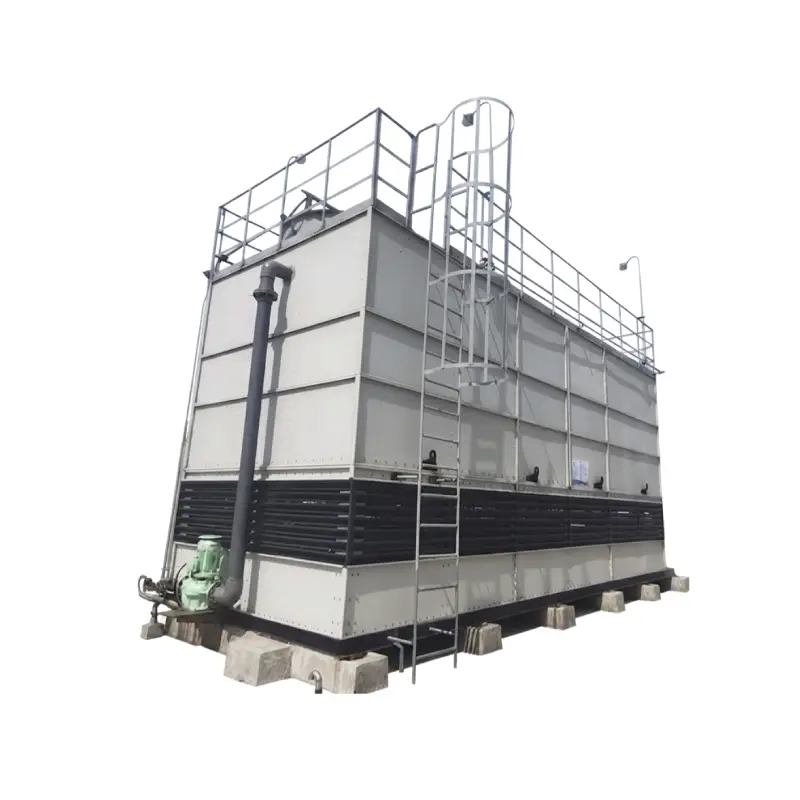
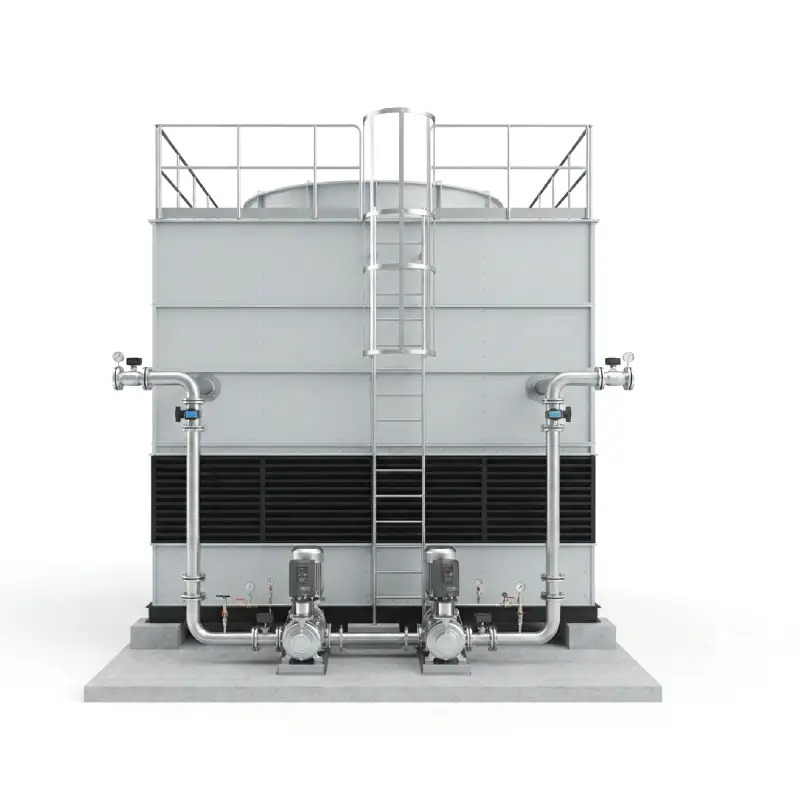
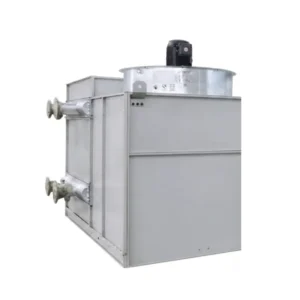
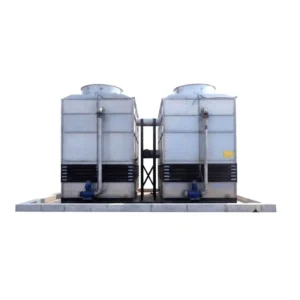
Closed cooling tower offers efficient heat exchange with a sealed circulation system, preventing contamination while providing reliable cooling for industrial equipment and processes.
By utilizing high-efficiency heat exchange tubes and air cooling technology, the system transfers heat effectively while maintaining stable circulating water quality. With advantages such as reliable performance, high heat transfer efficiency, and lower operating expenses, closed cooling towers are ideal for industries requiring continuous and efficient cooling solutions.
Cooling Tower Working Principle
A cooling tower works by using water evaporation and air circulation to remove heat from circulating water. The equipment forms a water film on the outer surface of the heat exchange pipes. Through continuous evaporation, heat is transferred from the soft water inside the pipes to the surrounding air, achieving efficient cooling performance.
The cooling process mainly relies on the high latent heat of vaporization of water. When water evaporates, it absorbs a large amount of heat energy, which improves heat transfer efficiency. Meanwhile, the axial flow fan creates airflow to accelerate evaporation and discharge humid air from the cooling tower.
- Water Film Evaporation for Heat Transfer: The cooling tower creates a thin water film on the outer surface of the heat exchange pipes. When the water film evaporates, it absorbs heat from the pipe surface and transfers it into the air, improving external heat transfer efficiency and reducing the temperature of the soft water inside the pipes.
- High Latent Heat Improves Cooling Efficiency: Water has a high latent heat of vaporization, allowing it to absorb significant heat during the evaporation process. At one atmosphere, water requires about 570 kcal/kg of heat for vaporization, which greatly enhances the overall heat exchange performance and cooling capacity of the equipment.
- Airflow Accelerates Evaporation Process: During operation, the axial flow fan draws air upward through the tube bundle. The airflow contacts the water film, absorbs moisture and heat, and increases evaporation speed. This continuous air movement helps maintain efficient heat transfer and improves the cooling effect of the tower.
- Mist Eliminator Removes Water Droplets: After passing through the tube bundle, the humid air enters the upper section of the cooling tower. The mist eliminator captures water droplets carried by the airflow, reducing water loss. The filtered humid air is then discharged into the atmosphere through the air outlet.
- Negative Pressure Enhances Heat Transfer: Since the axial flow fan is installed at the top of the equipment, it creates a negative pressure area when operating. This airflow condition increases air movement across the pipes, accelerates the evaporation of the external water film, and further improves the heat transfer efficiency of the cooling tower.
Cooling Tower Benefits
Cooling towers provide efficient heat removal solutions for industrial and commercial systems by improving energy utilization, reducing water consumption, and maintaining stable operating temperatures. Compared with traditional open cooling systems, modern cooling towers offer better environmental performance, easier maintenance, and reliable operation. Their closed-loop design also helps protect cooling water quality and extend equipment service life.
With advanced heat exchange technology, cooling towers can achieve significant water-saving and energy-saving results while meeting the cooling requirements of different industries. They are widely used in manufacturing, chemical processing, HVAC, and power-related applications where efficient and sustainable cooling is needed.
- 50% Water-Saving Compared to Open Cooling Towers: Closed cooling towers significantly reduce water consumption by minimizing evaporation losses and preventing direct exposure of circulating water to the environment. Compared with open cooling towers, they can save up to 50% water, making them an ideal choice for industries requiring efficient water management.
- 10% More Energy-Efficient Than Open Cooling Towers: Cooling towers optimize airflow and heat transfer processes to improve overall energy efficiency. Compared with open cooling systems, they can reduce energy consumption by approximately 10%, helping companies lower operating costs while maintaining effective cooling performance for industrial equipment.
- Reduce Emissions by 50%: By using a closed circulation system, cooling towers reduce water evaporation and minimize the discharge of wastewater and pollutants. This environmentally friendly design can help reduce emissions by up to 50%, supporting cleaner production processes and sustainable industrial operations.
- Easy Maintenance and Low Maintenance Costs: Cooling towers feature a simple structure and reliable components, making daily inspection and maintenance easier. The closed system reduces contamination, scaling, and cleaning requirements, helping lower maintenance frequency and long-term operating costs while improving equipment reliability.
- Closed Cycle, Water Quality Is Not Polluted: The closed-loop design keeps the circulating water isolated from external contaminants, dust, and impurities. This prevents water quality deterioration, reduces corrosion and scaling problems, and ensures stable cooling performance for sensitive industrial equipment and processes.
- Constant Cooling Water Temperature: Cooling towers provide stable temperature control by continuously transferring heat through efficient heat exchange. Maintaining a consistent cooling water temperature helps improve equipment operation, prevents overheating, and ensures reliable performance in production processes that require precise temperature management.
- Significant Water-Saving and Energy-Saving Effects: Through optimized evaporation and heat transfer technology, cooling towers reduce both water consumption and power usage. These energy-saving advantages help industries improve operational efficiency, reduce resource waste, and achieve more economical and environmentally friendly cooling solutions.
- A Wide Range of Applications: Cooling towers are suitable for various industries, including chemical processing, manufacturing, HVAC systems, power equipment, and industrial production lines. Their flexible design allows them to meet different cooling requirements and provide reliable performance in diverse operating environments.
- Anti-Clogging and Anti-Corrosion Performance: Cooling towers are designed with durable materials and optimized structures to resist clogging and corrosion. These features help maintain smooth water circulation, extend service life, reduce equipment failures, and ensure stable cooling performance even in demanding industrial conditions.
Cooling Tower Applications
Cooling towers are widely used in industrial and commercial systems where efficient heat removal and water circulation are required. By transferring excess heat from circulating water to the atmosphere through evaporation and air exchange, cooling towers help maintain stable operating temperatures, improve equipment performance, and reduce energy consumption across various industries.
The closed-loop cooling design of many cooling towers makes them suitable for applications requiring clean water circulation, environmental protection, and reliable temperature control. They are commonly used in manufacturing, chemical processing, energy systems, and HVAC applications where continuous cooling is essential.
- Induction Heating and Metal Processing Equipment: Cooling towers are widely applied in induction heating and metal melting systems, including high and medium-frequency quenching equipment, induction furnaces, insulation furnaces, and electric furnace power supplies. They provide stable cooling water circulation to prevent overheating and ensure reliable operation of metal processing equipment.
- Chemical Industry Reactors and Condensers: In chemical production, cooling towers are used to remove heat from circulating water in various reactors, condensers, and processing equipment. They help maintain precise temperature control during chemical reactions, improve production efficiency, and ensure safe operation of industrial chemical systems.
- Industrial Solution Cooling: Cooling towers can effectively cool industrial solutions such as quenching liquids and electroplating solutions. By maintaining the required temperature range, they improve process stability, enhance product quality, and extend the service life of production equipment used in metal treatment and surface finishing industries.
- Large Mold Cooling Systems: Cooling towers are commonly used for cooling large molds, including metal die-casting molds and injection molds. They provide continuous temperature regulation for plastic, automotive, and manufacturing industries, helping reduce mold deformation, improve production efficiency, and maintain consistent product quality.
- Large Equipment Cooling: Cooling towers are suitable for cooling large industrial equipment, including motors, diesel engines, rectification equipment, welding machines, hydraulic stations, and continuous casting systems. They remove excess heat generated during operation, improve equipment reliability, and support long-term continuous production.
- Closed-Loop Cooling for Polluting Media: Cooling towers with closed recycling systems are ideal for applications involving environmentally sensitive or polluted media. The closed circulation prevents contamination between cooling water and external environments while maintaining efficient heat removal and protecting industrial processes from impurities.
- High Cooling Temperature Difference Applications: Cooling towers are designed for systems requiring large cooling temperature differences. They can effectively handle high heat loads and remove significant amounts of thermal energy, making them suitable for industries that demand strong cooling performance and stable temperature control under challenging operating conditions.