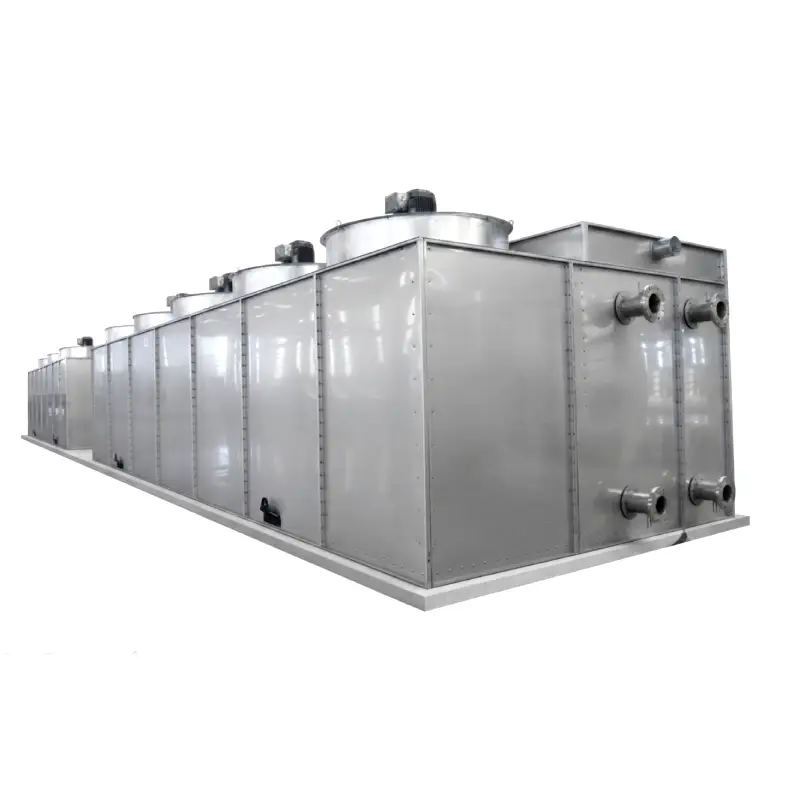
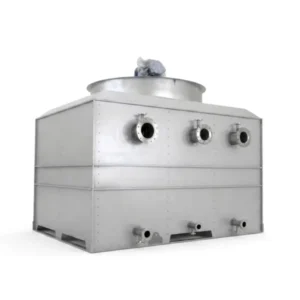
Closed Cooling Water Tower Benefits
Closed Cooling Water Tower is an efficient heat rejection system designed to provide stable cooling while protecting circulating water quality. Unlike traditional open cooling systems, it uses a sealed circulation process to reduce contamination, scaling, and corrosion. With reliable heat exchange performance, it helps industries improve equipment efficiency, reduce maintenance costs, and achieve energy-saving operation.
Its advanced closed-loop design makes it suitable for applications requiring clean cooling water, precise temperature control, and continuous operation. It provides dependable cooling solutions for various industrial processes, helping extend equipment service life and improve overall production reliability.
- Water quality protection: Closed Cooling Water Tower keeps the circulating water isolated from external contaminants, dust, and impurities. This closed design prevents water pollution, reduces scaling and corrosion problems, and helps maintain stable cooling performance for equipment requiring clean and reliable cooling water.
- Energy-efficient operation: Closed Cooling Water Tower improves heat transfer efficiency through optimized cooling technology. By reducing heat loss and minimizing unnecessary energy consumption, it helps lower operating costs while providing effective cooling performance for industrial equipment and production systems.
- Stable cooling temperature: The closed circulation system maintains consistent cooling water temperatures during operation. This precise temperature control helps prevent equipment overheating, improves process stability, and ensures reliable performance for industries with strict cooling requirements.
- Reduced water consumption: Closed Cooling Water Tower significantly reduces water loss compared with traditional open cooling systems. The sealed design minimizes evaporation and wastewater discharge, making it an environmentally friendly solution for industries focused on water conservation and sustainable operation.
- Anti-corrosion and anti-scaling performance: The closed-loop structure reduces contact between cooling water and external pollutants, lowering the risk of corrosion and mineral deposits. This helps extend equipment lifespan, maintain heat exchange efficiency, and reduce maintenance frequency and costs.
- Easy maintenance and long service life: Closed Cooling Water Tower features a reliable structure that simplifies inspection and maintenance. Reduced contamination and corrosion allow the equipment to operate longer with fewer repairs, improving system reliability and reducing long-term operating expenses.
- Wide range of applications: Closed Cooling Water Tower can meet cooling requirements across many industries, including manufacturing, chemical processing, power generation, HVAC, and mechanical production. Its flexible design allows it to provide efficient cooling solutions for different operating environments.
Closed Cooling Water Tower Applications
Closed Cooling Water Tower is widely applied in industries where efficient heat removal, clean water circulation, and stable temperature control are essential. Its closed-loop design protects cooling water from contamination while maintaining reliable performance. It is suitable for equipment and processes that require continuous cooling and precise thermal management.
From industrial manufacturing to energy systems, this cooling solution helps prevent overheating, improve equipment efficiency, and support stable production. Its excellent adaptability makes it a preferred choice for applications with strict cooling performance and water quality requirements.
- Industrial manufacturing equipment cooling: Closed Cooling Water Tower is commonly used for cooling production machinery, compressors, motors, and hydraulic systems. It removes excess heat efficiently, prevents equipment damage, and maintains stable operating conditions to support continuous industrial production.
- Chemical processing systems: Closed Cooling Water Tower is suitable for cooling reactors, condensers, and chemical production equipment. Its sealed circulation prevents contamination while providing stable temperature control, ensuring safer operation and improving the efficiency of chemical processing procedures.
- Power and electrical equipment cooling: Closed Cooling Water Tower provides reliable cooling for generators, transformers, electrical cabinets, and power systems. It effectively removes heat generated during operation, protects sensitive components, and helps improve equipment reliability and service life.
- HVAC and central cooling systems: Closed Cooling Water Tower is widely used in commercial buildings, industrial facilities, and large air conditioning systems. It provides efficient heat rejection, maintains stable cooling performance, and helps reduce energy consumption in climate control applications.
- Metal processing industry: Closed Cooling Water Tower supports cooling for induction furnaces, welding equipment, casting machines, and metal treatment systems. It maintains proper cooling temperatures, prevents thermal damage, and ensures stable operation in high-temperature manufacturing environments.
- Plastic and injection molding applications: Closed Cooling Water Tower is used for cooling injection molding machines, extrusion equipment, and large molds. It provides accurate temperature control, improves product quality, reduces production defects, and enhances manufacturing efficiency.
- Food and pharmaceutical industries: Closed Cooling Water Tower is suitable for industries requiring clean and stable cooling conditions. The closed system minimizes contamination risks and helps maintain consistent temperatures for production equipment while meeting strict process requirements.