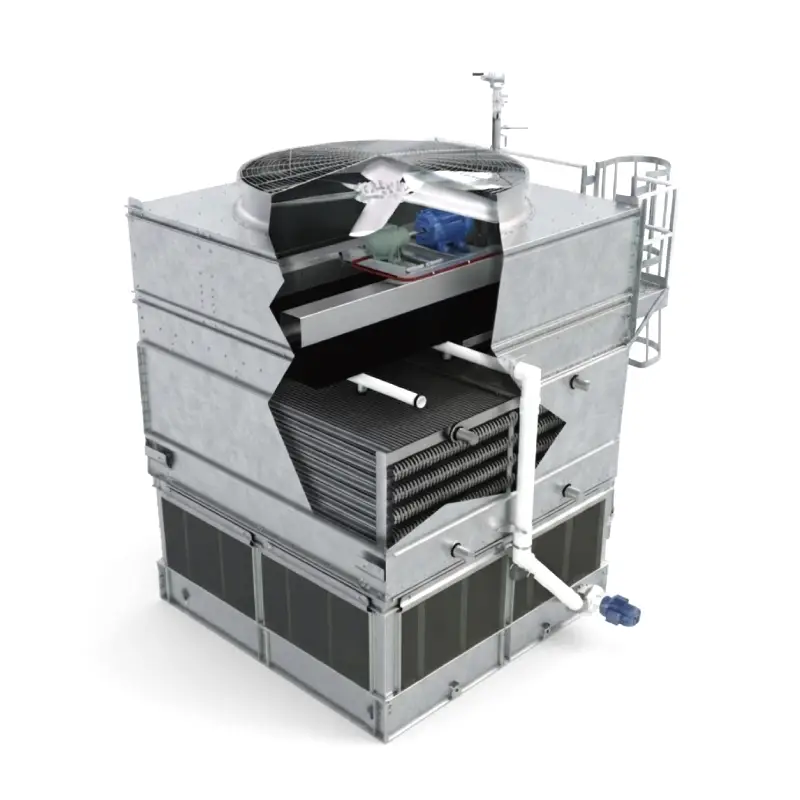
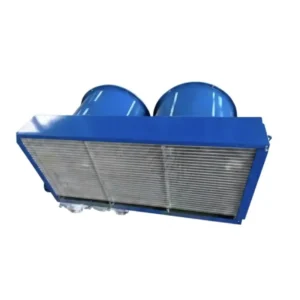
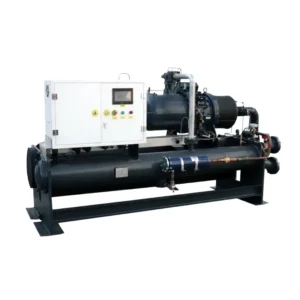
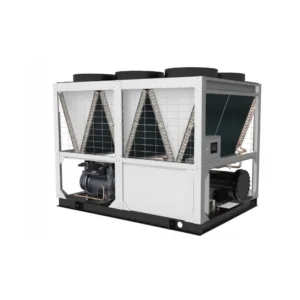
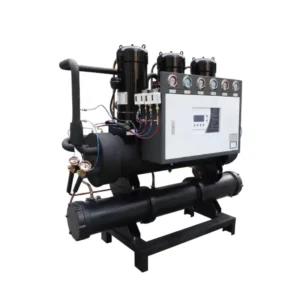
An Evaporative Condensing Unit is an advanced heat exchange system that combines water cooling and air cooling technologies. It uses spray water evaporation and airflow to remove heat from high-temperature refrigerant vapor inside the coil, allowing the refrigerant to gradually condense into liquid. With high heat transfer efficiency and energy-saving performance, it is widely used in refrigeration, cold storage, and industrial cooling systems.
Compared with traditional air-cooled and water-cooled condensers, evaporative condensing units offer better cooling efficiency, lower operating costs, and reduced water consumption. They are designed with components such as axial fans, spray nozzles, pumps, cooling coils, water collectors, and efficient eliminators to ensure stable operation.
High-Efficiency Heat Transfer Performance
- Combined cooling technology: The unit integrates water evaporation cooling and air cooling to remove condensation heat efficiently, improving heat transfer performance compared with conventional condenser systems.
- Enhanced refrigerant condensation: Spray water absorbs heat from the refrigerant coil through evaporation, helping high-temperature refrigerant vapor quickly transform into liquid for improved refrigeration efficiency.
- Optimized energy usage: The efficient heat exchange process reduces compressor workload, lowers power consumption, and helps refrigeration systems achieve better overall energy-saving performance.
Water and Energy Saving Benefits
- Reduced water consumption: The evaporative cooling process uses water efficiently by relying on evaporation rather than continuous water circulation, minimizing operating water requirements.
- Lower operating costs: Improved heat rejection efficiency allows refrigeration equipment to operate with lower condensing temperatures, reducing electricity consumption and long-term maintenance expenses.
- Environmentally friendly operation: The system helps reduce energy waste and resource consumption, making it suitable for modern cooling applications with sustainability requirements.
Reliable Structure and Stable Operation
- Advanced component design: The unit consists of axial fans, spray nozzles, electronic water descaling devices, coils, pumps, fillers, and water collection systems for reliable performance.
- Effective scale and corrosion control: Integrated water treatment and filtration components help maintain clean operation, extending equipment lifespan and reducing maintenance frequency.
- Durable cooling performance: The enclosed coil structure protects the refrigerant from external contamination while ensuring stable heat exchange under different working conditions.
Applications of Evaporative Condensing Unit
Refrigeration and Air Conditioning Applications
- Industrial Refrigeration: Industrial cooling systems are widely applied in manufacturing plants, chemical industries, food processing, and other production environments where precise temperature control is required for equipment operation and product quality.
- Commercial Refrigeration: Commercial refrigeration solutions are used in cold storage, supermarkets, warehouses, and other facilities to maintain suitable temperatures for food preservation, logistics, and daily business operations.
- Central Air Conditioning: Central HVAC systems provide efficient cooling solutions for large buildings, offices, shopping centers, and public facilities, ensuring comfortable indoor environments and stable air quality.
- Heat Pump Systems: Heat pump systems are used for energy-efficient heating and cooling applications, providing reliable temperature regulation for residential, commercial, and industrial buildings.
Industrial Applications
- Petrochemical Industry: Cooling systems support petrochemical processes by controlling operating temperatures, improving production efficiency, and ensuring safe operation of industrial equipment.
- Power Industry: Cooling solutions are essential in power plants for equipment heat dissipation, generator cooling, and maintaining stable operation of power generation systems.
- Steel Industry: High-performance cooling systems are used in steel manufacturing to remove heat from furnaces, production lines, and processing equipment under high-temperature working conditions.
- Electronics Industry: Precision cooling systems provide stable temperature and humidity control for electronics manufacturing, semiconductor production, and data center environments, helping protect sensitive equipment and improve reliability.